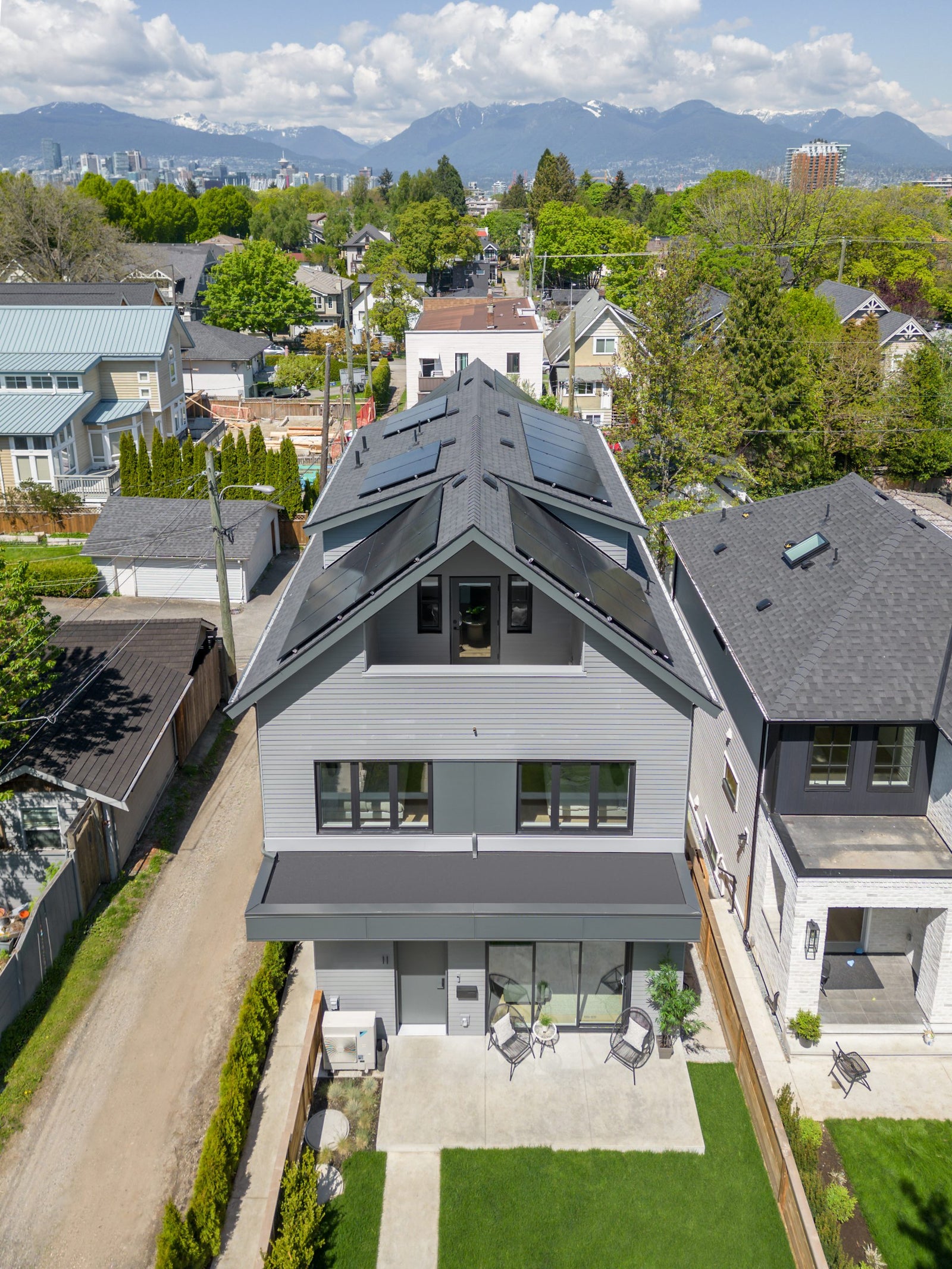
Building a home in Vancouver involves a long list of decisions, from choosing a lot and designing the layout to selecting finishes and heating systems. For homeowners interested in reducing energy use, there’s another option to consider: building a net-zero home.A net-zero home is designed to produce as much energy as it uses over the course of a year. It combines an energy-efficient design with renewable energy generation, often using rooftop solar panels. The result is a home that can offer lower energy bills, greater comfort and a smaller environmental footprint.But what does it cost to build one in Vancouver? Here’s an overview of the potential costs and the features that can influence your budget.
Understanding Net-Zero Homes
The foundation of a net-zero home is energy efficiency. Features such as well-insulated walls, high-performance windows and an airtight building envelope help reduce the amount of energy needed to heat and cool the home. Efficient appliances, lighting and mechanical systems can reduce consumption further.Once the home’s energy needs have been minimized, a renewable energy system is used to generate enough energy to offset its annual consumption.In Canada, the Canadian Home Builders’ Association (CHBA) offers a Net Zero Home Labelling Program. The program provides a framework for evaluating and recognizing homes that meet its net-zero requirements.
Benefits of a Net-Zero Home
The appeal of a net-zero home goes beyond the potential for energy savings. Depending on its design and systems, benefits may include:
- Lower energy costs: Reduced consumption and on-site energy production can help lower utility bills over time.
- Consistent indoor comfort: Effective insulation and an airtight building envelope can help maintain more even temperatures throughout the home.
- Improved ventilation: Mechanical ventilation systems can provide a steady supply of fresh air and help manage indoor air quality.
- A quieter interior: Insulation and high-performance windows can also help reduce outside noise.
- A smaller environmental footprint: Using less energy and generating renewable energy can reduce the home’s overall environmental impact.
A high-performing home may also appeal to future buyers who value energy efficiency, although its eventual resale value will depend on the market and the property itself.
Estimated Construction Costs in Vancouver
As a general starting point, a net-zero build in Vancouver may cost approximately $450 to $600 or more per square foot. The final price will depend on the design, site conditions, materials, labour and systems selected.Using that range, the construction estimates for two example properties would be:HomeEstimated cost at $450 per sq. ft.Estimated cost at $600 per sq. ft.3,248 sq. ft. single-family home$1,461,600$1,948,8003,304 sq. ft. duplex$1,486,800$1,982,400These are illustrative estimates, not quotes. Before using a cost-per-square-foot figure to plan your project, confirm what it includes and whether it accounts for expenses such as land, design fees, permits, landscaping and applicable taxes.
What Affects the Cost?
Every build is different, but several choices can have a significant effect on a net-zero construction budget.
Design and layout
The shape and orientation of a home influence how efficiently it uses energy. A straightforward design may be less expensive to build and easier to make energy-efficient than one with a more complex layout.
Insulation, windows and doors
A high-performance building envelope helps keep heat inside during colder months and limits unwanted heat gain in warmer weather. Better insulation, windows and doors can add to construction costs, but they are central to reducing the home’s energy needs.
Heating, cooling and ventilation
Efficient mechanical systems, such as heat pumps and heat-recovery ventilation, are commonly considered for energy-efficient homes. The cost will vary based on the equipment, the size of the property and installation requirements.
Renewable energy
Solar panels are one way to generate energy on-site. Their cost will depend on the size of the system and the property’s suitability. Other technologies may be considered depending on the project.
Testing and certification
If you want your home recognized through a formal program, budget for the required energy modelling, testing, documentation and certification.
Site conditions and finishes
A challenging lot, extensive excavation or higher-end finishes can increase the cost of any Vancouver home build. These expenses should be considered alongside the features required to achieve net-zero performance.
Planning Your Budget
Before construction begins, work with your builder and design team to develop a detailed budget. In addition to construction costs, consider professional fees, permits, energy modelling, renewable energy equipment and a contingency for unexpected expenses.It’s also helpful to discuss your net-zero goals early in the design process. Decisions about the layout, building envelope and mechanical systems work together, and planning them from the start can help your team identify an approach that fits your priorities and budget.
Is a Net-Zero Home Worth It?
A net-zero home can cost more upfront than a conventional build, but it may offer ongoing savings and a more comfortable living environment. Whether the investment makes sense will depend on your construction costs, energy use, financing and how long you plan to own the property.If you’re considering a net-zero home in Vancouver, speak with professionals experienced in high-performance construction. They can help you assess your site, explore certification options and develop a realistic budget for your project.